
The Website Makers

The Website Makers

The Rise of Influencer Marketing: Leveraging Social Media Influencers to Reach and Engage Audiences

Influencer marketing has emerged as a popular and effective strategy for businesses looking to reach and engage audiences in the digital age. This blog explores the rise of influencer marketing, its benefits and challenges, and best practices for leveraging social media influencers to achieve marketing objectives. In today’s social media-driven world, influencers wield considerable influence and power over their followers, making them valuable partners for brands looking to reach and engage target audiences. Whether they’re celebrities, industry experts, or everyday consumers with a large following, influencers have the ability to shape opinions, influence purchasing decisions, and drive engagement and conversions through their authentic and relatable content. One of the key benefits of influencer marketing is its ability to reach highly targeted and engaged audiences through trusted and authentic voices. Unlike traditional advertising, which can feel impersonal and intrusive, influencer marketing allows brands to connect with audiences in a more genuine and authentic way, leveraging the trust and credibility that influencers have built with their followers over time. Moreover, influencer marketing is a cost-effective strategy for businesses of all sizes and industries, offering a high return on investment (ROI) compared to traditional advertising channels. By partnering with influencers who align with their brand values and target audience demographics, businesses can reach and engage audiences at a fraction of the cost of traditional advertising, driving brand awareness, consideration, and conversion in the process. Additionally, influencer marketing offers opportunities for brands to generate user-generated content (UGC) and social proof, which can further amplify their marketing efforts and drive engagement and conversions. By encouraging influencers and their followers to create and share content related to their products and brand experiences, businesses can leverage the power of social proof to build trust and credibility with audiences and drive conversions. Overall, influencer marketing is a powerful and effective strategy for businesses looking to reach and engage audiences in the digital age. By partnering with influencers who align with their brand values and target audience demographics, businesses can leverage the trust and credibility of influencers to drive brand awareness, consideration, and conversion in the ever-evolving digital landscape.

The Rise of Influencer Marketing: Leveraging Social Media Influencers to Reach and Engage Audiences Read More »

The Power of Content Marketing: Driving Engagement, Brand Awareness, and Conversions

Content marketing has emerged as a powerful strategy for businesses looking to attract, engage, and convert customers in the digital age. This blog explores the transformative power of content marketing in driving brand awareness, building customer relationships, and driving conversions. In today’s crowded digital landscape, consumers are inundated with advertisements and promotional messages, making it increasingly challenging for businesses to capture their attention and stand out from the competition. Content marketing offers a solution to this challenge by providing valuable, informative, and entertaining content that resonates with audiences and builds trust and credibility over time. From blog posts and articles to videos, infographics, and podcasts, content marketing takes many forms, enabling businesses to reach audiences through multiple channels and touchpoints. By providing valuable information, insights, and entertainment, businesses can attract and engage audiences, establish themselves as thought leaders and industry experts, and foster meaningful connections that drive loyalty and advocacy in the digital marketplace. Moreover, content marketing is a cost-effective strategy for businesses of all sizes and industries, offering a high return on investment (ROI) compared to traditional advertising and marketing channels. By creating evergreen content that continues to attract and engage audiences long after it’s published, businesses can generate leads and conversions at a fraction of the cost of paid advertising, driving sustainable growth and profitability in the long term. Additionally, content marketing plays a crucial role in driving organic traffic and improving search engine rankings through search engine optimization (SEO). By creating high-quality, relevant content that aligns with user intent and search queries, businesses can increase their visibility in search engine results, attract qualified leads, and drive traffic to their website, ultimately driving conversions and revenue growth. Overall, content marketing is a powerful strategy for businesses looking to drive engagement, build brand awareness, and generate leads and conversions in the digital age. By creating valuable, informative, and entertaining content that resonates with audiences, businesses can attract and engage customers, establish themselves as industry leaders, and drive sustainable growth and profitability in the ever-evolving digital landscape.

The Power of Content Marketing: Driving Engagement, Brand Awareness, and Conversions Read More »

The Website Revolution: How Digital Transformation Is Redefining Business Strategies and Customer Experiences

The digital transformation revolution is reshaping business strategies and customer experiences, making websites more essential than ever for businesses looking to stay competitive and relevant in today’s digital landscape. This blog explores the transformative power of websites in driving digital innovation, enhancing customer engagement, and redefining business models in the age of digital disruption. In the era of digital transformation, websites are at the forefront of innovation, enabling businesses to leverage emerging technologies and trends to create immersive, personalized, and seamless customer experiences. From responsive design and mobile optimization to AI-driven chatbots and voice search, websites are evolving to meet the changing needs and expectations of customers in an increasingly connected and digital world. Moreover, websites serve as a platform for experimentation and agility, enabling businesses to test new ideas, iterate quickly, and adapt to changing market conditions with speed and flexibility. Through features such as A/B testing, user feedback, and data analytics, businesses can gather valuable insights and iterate on their website design, content, and functionality to optimize performance and drive continuous improvement in the digital landscape. Furthermore, websites are driving new business models and revenue streams through e-commerce, subscription services, and digital marketplaces that transcend traditional boundaries and unlock new opportunities for growth and monetization. With the rise of online marketplaces and direct-to-consumer (DTC) brands, businesses are leveraging their websites to reach customers directly, bypassing intermediaries and traditional distribution channels to capture market share and maximize profitability in the digital age. Additionally, websites are democratizing access to information, resources, and opportunities, empowering businesses of all sizes and industries to compete on a level playing field in the global marketplace. From startups and small businesses to multinational corporations, websites provide a platform for innovation, entrepreneurship, and economic empowerment, enabling businesses to reach audiences worldwide and drive positive change in the world. Overall, in the age of digital transformation, websites are driving innovation, enhancing customer engagement, and redefining business strategies in ways previously unimaginable. As businesses continue to embrace digital technologies and trends, the transformative power of websites will remain essential for driving growth, fostering innovation, and delivering value to customers in the ever-evolving digital landscape.
The Website Revolution: How Digital Transformation Is Redefining Business Strategies and Customer Experiences Read More »

Navigating the Digital Frontier: How Websites Are Essential for Businesses in the New Normal

The COVID-19 pandemic has accelerated the shift towards digitalization, making websites more essential than ever for businesses navigating the new normal. This blog explores the critical role of websites in helping businesses adapt to the challenges and opportunities of the digital frontier, highlighting their importance as a lifeline for continuity, resilience, and growth in uncertain times. In the face of unprecedented disruptions and lockdown measures, businesses with a strong online presence and e-commerce capabilities were better positioned to weather the storm and continue serving customers amidst evolving restrictions and changing consumer behaviors. A well-designed and optimized website enabled businesses to pivot to online sales and digital channels, reach customers where they are, and maintain continuity of operations in the face of uncertainty. Moreover, websites played a crucial role in facilitating communication, collaboration, and remote work during the pandemic, enabling businesses to stay connected with employees, customers, and stakeholders in a virtual environment. Through features such as video conferencing, online chat, and collaboration tools, businesses were able to maintain productivity, foster teamwork, and deliver seamless customer experiences in a distributed workforce. Furthermore, websites served as a lifeline for small businesses and entrepreneurs looking to survive and thrive in the new normal, providing a platform for innovation, creativity, and resilience in the face of adversity. From online stores and delivery services to virtual events and digital marketing campaigns, businesses leveraged their websites to adapt to changing customer needs and behaviors, find new revenue streams, and stay relevant in a rapidly evolving marketplace. Additionally, websites enabled businesses to build trust and credibility with customers by providing accurate, up-to-date information about products, services, and safety protocols during the pandemic. Through dedicated COVID-19 resource pages, FAQs, and blog posts, businesses were able to address customer concerns, communicate important updates, and demonstrate their commitment to safety and transparency, building stronger relationships and loyalty in the process. Overall, the COVID-19 pandemic has underscored the critical importance of websites for businesses in the new normal, serving as a lifeline for continuity, resilience, and growth in uncertain times. As businesses continue to navigate the digital frontier, a strong online presence and well-designed website will remain essential for success, enabling businesses to adapt, innovate, and thrive in the ever-evolving digital landscape.

Navigating the Digital Frontier: How Websites Are Essential for Businesses in the New Normal Read More »

The Website Advantage: Why Every Business Needs a Strong Online Presence in Today’s Digital Landscape

In today’s digital landscape, a strong online presence is essential for businesses looking to succeed and thrive in a competitive marketplace. This blog explores the advantages of having a website for businesses of all sizes and industries, highlighting the numerous benefits of establishing a strong online presence in the digital age. One of the primary advantages of having a website is increased visibility and reach in the digital landscape. With billions of users accessing the internet every day to search for information, products, and services, a well-designed and optimized website enables businesses to expand their reach, attract new customers, and connect with audiences worldwide, regardless of geographic location or time zone. Moreover, a website provides businesses with a platform for brand building, storytelling, and engagement, enabling them to showcase their products, services, and values to audiences in a compelling and interactive manner. Through features such as blogs, videos, and social media integration, businesses can share their story, educate and inspire customers, and foster meaningful connections that drive loyalty and advocacy in the digital marketplace. Furthermore, a website serves as a powerful marketing tool for businesses, enabling them to promote their products and services, generate leads, and drive conversions online. With features such as search engine optimization (SEO), email marketing, and pay-per-click (PPC) advertising, businesses can attract qualified leads, nurture relationships, and drive sales and revenue growth in the digital landscape. Additionally, a website provides businesses with valuable data and insights into customer behavior, preferences, and trends through analytics and tracking tools. By analyzing website traffic, engagement metrics, and conversion rates, businesses can gain actionable insights that inform marketing strategies, product development, and business decisions, enabling them to adapt and evolve in response to changing market dynamics and customer needs. Overall, in a digital landscape where online presence is synonymous with business success, the advantages of having a website are clear. From increased visibility and reach to brand building and customer engagement, a website provides businesses with the tools and opportunities they need to succeed and thrive in today’s competitive marketplace, enabling them to connect with audiences, drive engagement, and achieve their goals in the ever-evolving digital landscape.

The Website Advantage: Why Every Business Needs a Strong Online Presence in Today’s Digital Landscape Read More »

The Digital Evolution: How Websites Have Transformed Business Operations and Customer Engagement

The evolution of the internet and digital technologies has transformed the way businesses operate and engage with customers, making websites an indispensable tool for success in the digital age. This blog explores the profound impact of websites on business operations and customer engagement, highlighting their role as a catalyst for innovation, efficiency, and growth in the digital landscape. In the digital age, websites have revolutionized business operations by providing a platform for automation, efficiency, and scalability. From online sales and customer service to inventory management and data analytics, websites streamline processes and workflows, enabling businesses to operate more efficiently, reduce costs, and scale operations to meet growing demand in the digital marketplace. Moreover, websites have transformed customer engagement by providing businesses with a direct and interactive channel for communication, interaction, and relationship-building with customers. Through features such as live chat, contact forms, and social media integration, websites enable businesses to engage with customers in real-time, address inquiries and concerns promptly, and foster meaningful connections that drive loyalty and retention in the digital landscape. Furthermore, websites serve as a hub for content creation, distribution, and engagement, enabling businesses to share valuable information, resources, and insights with audiences worldwide. Through blogs, articles, videos, and other multimedia content, businesses can educate, inspire, and entertain customers, building trust and credibility while establishing themselves as thought leaders and industry experts in the digital marketplace. Additionally, websites provide businesses with valuable data and insights into customer behavior, preferences, and trends through analytics and tracking tools. By analyzing website traffic, engagement metrics, and conversion rates, businesses can gain actionable insights that inform marketing strategies, product development, and business decisions, enabling them to adapt and evolve in response to changing market dynamics and customer needs. Overall, websites have become indispensable tools for businesses in the digital age, transforming operations, enhancing customer engagement, and driving growth and innovation in the ever-evolving digital landscape. From streamlining business processes and fostering meaningful connections with customers to providing valuable insights and driving strategic decision-making, websites play a central role in shaping the future of business in the digital era.

The Digital Evolution: How Websites Have Transformed Business Operations and Customer Engagement Read More »

The Digital Imperative: Understanding the Vital Role of Websites in Today’s Business Landscape

In today’s hyperconnected world, a website is more than just a digital storefront—it’s a gateway to success in the digital landscape. This blog explores the fundamental importance of websites for businesses in the digital age, highlighting their role as the cornerstone of online presence, brand identity, and customer engagement. A website serves as the digital storefront for businesses, providing a central hub where customers can learn about products and services, make purchases, and interact with brands. In an era where online shopping and digital transactions are the norm, a well-designed and user-friendly website is essential for attracting and retaining customers, driving sales, and staying competitive in the digital marketplace. Moreover, a website is a powerful tool for brand identity and storytelling, allowing businesses to convey their unique value proposition, mission, and values to audiences worldwide. Through compelling content, visual elements, and interactive features, a website enables businesses to establish a strong brand presence, build trust and credibility, and differentiate themselves from competitors in the crowded digital landscape. Furthermore, a website provides businesses with valuable insights into customer behavior, preferences, and trends through analytics and tracking tools. By analyzing website traffic, engagement metrics, and conversion rates, businesses can gain actionable insights that inform marketing strategies, product development, and business decisions, empowering them to adapt and evolve in response to changing market dynamics and customer needs. Additionally, a website enhances visibility and discoverability in search engine results, driving organic traffic and increasing brand visibility online. With search engines serving as the primary gateway to information and products for billions of users worldwide, a well-optimized website is essential for improving search engine rankings, attracting qualified leads, and expanding reach in the digital landscape. Overall, in a digital world where online presence is synonymous with business success, the importance of websites cannot be overstated. From serving as the digital storefront and brand identity to providing valuable insights and enhancing visibility in search engine results, a website is a cornerstone of success for businesses in the digital age, enabling them to connect with audiences, drive engagement, and achieve their goals in the ever-evolving digital landscape.

The Digital Imperative: Understanding the Vital Role of Websites in Today’s Business Landscape Read More »

Edge Computing: Decentralizing Data Processing for Real-Time Insights and Faster Decision-Making

Edge computing is a distributed computing paradigm that brings computation and data storage closer to the source of data generation, enabling real-time processing and analysis of data at the edge of the network. By decentralizing data processing and reducing latency, edge computing offers numerous benefits for businesses and organizations across various industries, including improved performance, enhanced reliability, and greater efficiency. One of the key advantages of edge computing is its ability to reduce latency and improve response times by processing data closer to the point of origin. Unlike traditional cloud computing, where data is sent to centralized data centers for processing, edge computing enables data to be processed locally on edge devices or edge servers, reducing the time it takes for data to travel back and forth between devices and the cloud. This real-time processing capability is particularly important for applications that require low latency, such as autonomous vehicles, industrial automation, and remote monitoring, where split-second decisions can mean the difference between success and failure. Furthermore, edge computing offers greater resilience and reliability by reducing dependence on centralized data centers and network infrastructure. By distributing computing resources across multiple edge nodes or devices, edge computing ensures that critical applications and services remain operational even in the event of network outages or disruptions. This decentralized architecture also improves fault tolerance and load balancing, ensuring consistent performance and availability for users and devices. Another key benefit of edge computing is its ability to conserve bandwidth and reduce data transmission costs by processing data locally and sending only relevant information to the cloud. This is particularly important for applications that generate large volumes of data, such as IoT devices and sensors, where transmitting all data to the cloud for processing and analysis can strain network resources and incur high data transmission costs. By pre-processing and filtering data at the edge, organizations can optimize bandwidth usage, reduce data transfer times, and lower operational costs associated with cloud computing. Moreover, edge computing enables organizations to extract real-time insights and derive actionable intelligence from data at the source, enabling faster decision-making and more efficient operations. By analyzing data locally on edge devices or edge servers, organizations can identify trends, patterns, and anomalies in real-time, enabling proactive maintenance, predictive analytics, and optimization of resources. This real-time intelligence empowers organizations to respond quickly to changing conditions and make informed decisions that drive business outcomes and competitive advantage. Overall, edge computing represents a paradigm shift in how data is processed, analyzed, and acted upon in the digital age. By decentralizing data processing and bringing computation closer to the source of data generation, edge computing offers numerous benefits, including reduced latency, improved reliability, bandwidth optimization, and real-time insights, that enable organizations to innovate, adapt, and thrive in an increasingly connected and data-driven world.

Edge Computing: Decentralizing Data Processing for Real-Time Insights and Faster Decision-Making Read More »

Cybersecurity in the Digital Age: Safeguarding Against Evolving Cyber Threats

In the digital age, cybersecurity is more important than ever as businesses, governments, and individuals rely increasingly on digital technologies to communicate, transact, and collaborate. With the proliferation of cyber threats and the growing sophistication of cyber attacks, safeguarding against evolving threats requires a proactive and multi-faceted approach to cybersecurity. One of the most significant challenges in cybersecurity is the rise of sophisticated cyber attacks that target vulnerabilities in software, networks, and devices. Cybercriminals employ a variety of tactics, techniques, and procedures (TTPs) to breach defenses, steal sensitive information, and disrupt operations, including malware, ransomware, phishing, and social engineering. To counter these threats, organizations must adopt a multi-layered defense strategy that combines technical controls, user education, and threat intelligence to detect, prevent, and respond to cyber attacks effectively. Furthermore, securing the supply chain has become increasingly important as organizations rely on third-party vendors and suppliers for critical products and services. Cybercriminals often target supply chain partners as a vector for cyber attacks, exploiting vulnerabilities in software, hardware, and firmware to infiltrate networks and compromise systems. To mitigate supply chain risks, organizations must implement robust vendor management practices, conduct thorough security assessments, and enforce contractual obligations to ensure that suppliers adhere to cybersecurity best practices and standards. Another key challenge in cybersecurity is the growing complexity of IT environments, which can make it difficult to identify and mitigate security vulnerabilities and threats effectively. As organizations adopt cloud computing, IoT devices, and hybrid IT architectures, the attack surface expands, creating new opportunities for cybercriminals to exploit weaknesses and gain unauthorized access to networks and data. To address these challenges, organizations must implement comprehensive security controls, such as network segmentation, access controls, and encryption, to protect sensitive information and prevent unauthorized access. Moreover, securing remote workforces has become a priority for organizations as the COVID-19 pandemic has accelerated the shift to remote and hybrid work models. Remote employees often use personal devices and unsecured networks to access corporate resources, increasing the risk of data breaches and cyber attacks. To secure remote work environments, organizations must implement secure remote access solutions, enforce strong authentication measures, and provide cybersecurity training and awareness programs to educate employees about the risks of remote work and how to mitigate them effectively. Overall, cybersecurity is a dynamic and evolving field that requires continuous vigilance, adaptability, and innovation to stay ahead of emerging threats and protect against cyber attacks. By adopting a proactive and multi-layered approach to cybersecurity, organizations can mitigate risks, safeguard sensitive information, and maintain the trust and confidence of customers, partners, and stakeholders in an increasingly digital world.

Cybersecurity in the Digital Age: Safeguarding Against Evolving Cyber Threats Read More »

5G Technology: Unlocking the Potential of Hyperconnectivity and Real-Time Communication

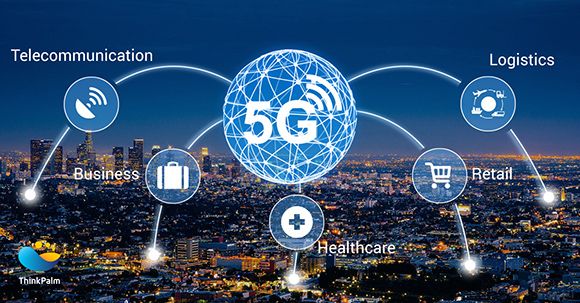
5G technology, the fifth generation of wireless communication, is poised to revolutionize connectivity and unlock new possibilities for hyperconnectivity and real-time communication. With its promise of faster speeds, lower latency, and greater bandwidth, 5G has the potential to transform industries, enable new use cases, and enhance the way we live, work, and interact with technology. One of the most significant benefits of 5G technology is its ability to deliver faster speeds and lower latency than previous generations of wireless communication. With speeds up to 100 times faster than 4G LTE and latency as low as one millisecond, 5G enables real-time communication and immersive experiences that were previously impossible. This ultra-fast and ultra-responsive connectivity opens up new possibilities for applications such as augmented reality (AR), virtual reality (VR), telemedicine, and autonomous vehicles, where split-second responsiveness is critical. Furthermore, 5G technology offers greater bandwidth and capacity, allowing for more devices to connect simultaneously without sacrificing performance. This increased capacity is particularly important in the era of the Internet of Things (IoT), where billions of interconnected devices, sensors, and machines require seamless and reliable connectivity to operate efficiently. With 5G, IoT devices can communicate more effectively, enabling smart cities, industrial automation, remote monitoring, and intelligent transportation systems that improve efficiency, safety, and sustainability. Another key advantage of 5G technology is its ability to enable network slicing, which allows operators to create multiple virtual networks on a single physical infrastructure. Network slicing enables customization and optimization of network resources for specific applications and use cases, such as ultra-reliable low-latency communication (URLLC) for mission-critical applications like autonomous vehicles and remote surgery, or enhanced mobile broadband (eMBB) for high-speed data services like streaming video and online gaming. Moreover, 5G technology has the potential to bridge the digital divide and bring high-speed internet access to underserved and rural areas around the world. With its ability to deliver high-speed connectivity over longer distances and in challenging environments, 5G can provide internet access to remote communities, schools, and healthcare facilities, empowering individuals and communities with access to information, education, and opportunity. Overall, 5G technology represents a significant leap forward in wireless communication, offering faster speeds, lower latency, greater bandwidth, and increased capacity that unlock new possibilities for hyperconnectivity and real-time communication. As businesses, governments, and consumers embrace 5G technology and its potential applications, the future of connectivity is brighter than ever before.

5G Technology: Unlocking the Potential of Hyperconnectivity and Real-Time Communication Read More »